Vehicle Loan Repossession: How to Get Your Seized Car Back
Supreme Court Repossession Rules & 14-Day Notice Defense
Did loan recovery agents seize your car or threaten to take it away? Discover your legal rights under Supreme Court judgments, mandatory 14-day notice rules, and exact steps to get your vehicle released.
No lender has the legal power to stop your car on a public road. Agents cannot force you out of the driver seat. If men surround your vehicle, lock your doors. Dial 112 at once. Tell the police that unknown persons are attempting road robbery.
Banks have a right to recover unpaid money, but they cannot use force. They cannot hire musclemen to snatch cars. Under Supreme Court rules, lenders must give a 14-day written notice first. They must draft a signed inventory sheet on the spot. They must also give you 30 days to pay and reclaim your car before any auction. Forceful seizure is a criminal offense under Indian law.
All these RBI rules, regulatory guidelines, and police FIR provisions exist officially in the books. However, the ground reality is that the Indian judicial and police system moves very slowly. In most everyday cases, lodging a formal complaint or filing an FIR will not give you immediate relief from aggressive collection calls.
The honest fact is: until all of your outstanding loans are either officially settled (via One-Time Settlement) or fully closed, the probability of getting complete peace of mind from recovery agencies is very low.
1. Change Your Mobile Number: Switch to a fresh SIM card for daily use, sharing it strictly with close family. Keep your old loan-registered SIM on silent in a spare phone to check SMS once weekly for official bank notices. This instantly cuts off the non-stop daily barrage of abusive phone calls.
2. Shift Your Residential Address: If recovery agents or local collection musclemen know your rented flat and keep showing up to humiliate you before neighbors, relocate to a different address if possible to protect your family from doorstep embarrassment.
3. Delete the Loan App & Revoke All Permissions: Immediately uninstall the lending app from your smartphone. Before deleting, open phone settings, revoke all permissions (contacts, storage, camera, location), and clear app data so trackers cannot continue harvesting your real-time data or accessing your contact list.
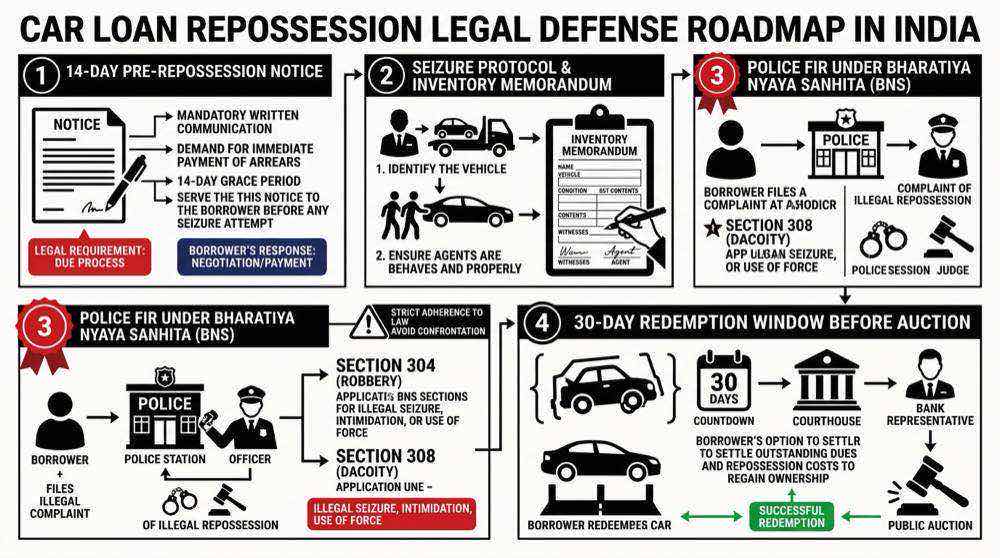
Fig 1.0: Statutory Repossession Defense & Vehicle Redemption Roadmap
01. They Took My Car: What Just Happened and Is It Legal?
If you miss two or three car loan EMIs, your bank wants its money back. Soon, private recovery agents track your car. Many borrowers wake up to find their car missing from outside their house. Others get stopped on the road by aggressive men demanding the keys.
Borrowers panic and ask: Can the bank take my car like this? The answer is no. Under Indian law, the bank does not own your car. Your name is on the Registration Certificate (RC) as the registered owner. The bank only holds a loan hypothecation under Section 51 of the Motor Vehicles Act.
Taking any car by force, threats, or stealth is illegal. Recovery agents are not court bailiffs. They are private agents working for commission. When they snatch your vehicle without written notice, their action counts as a crime under the Bharatiya Nyaya Sanhita (BNS). Knowing this gives you the power to fight back.
- Check nearby CCTV cameras to verify who took the vehicle.
- Call your bank branch to confirm if they sent agents.
- Ask for the agency name, agent phone numbers, and yard location.
- Never sign blank papers or a backdated voluntary surrender letter.
02. Supreme Court Ban on Musclemen: Prakash Kaur to 2026 Ruling
The Supreme Court of India strictly bans using musclemen to recover vehicles. In Manager, ICICI Bank Ltd. v. Prakash Kaur (2007), the court held that India is governed by the rule of law. Banks cannot use strong-arm tactics to settle civil loan defaults. They must follow legal procedures through civil courts.
This principle was reaffirmed in Citicorp Maruti Finance Ltd. v. S. Vijayalaxmi (2012). The Supreme Court ruled that repossession clauses in loan contracts do not give banks a license to use force. Contract terms can never override Indian criminal law.
On September 16, 2026, the Supreme Court ruled again in Hari Dutta Sharma v. State of U.P. & Ors. (2026 INSC 998). In that case, recovery agents broke a truck steering lock at 1:00 AM without notice and sold it. The Supreme Court awarded the borrower 10 Lakh Rupees in compensation for lost livelihood and mental pain. The court ordered a full refund of the sale proceeds with interest. It directed the RBI to enforce recovery rules strictly. The Patna High Court in Dhananjay Seth v. Union of India (2023) also ruled that roadside seizure violates Article 21 rights.
Prakash Kaur (2007): Absolute ban on musclemen and goons for loan recovery.
Vijayalaxmi (2012): Loan contract clauses cannot override criminal law.
Hari Dutta Sharma (2026): 10 Lakh Rupees compensation for midnight seizure without notice.
Dhananjay Seth (2023): Roadside car seizure violates fundamental rights under Article 21.
03. The Mandatory 4-Stage Repossession Timeline & 14-Day Notice
Under the RBI Fair Practices Code, banks must follow four clear steps before seizing any vehicle:
When your loan becomes an NPA after 90 days of non-payment, the lender must send a registered letter. It must give you 7 to 14 days to clear your overdue EMIs. WhatsApp texts or casual phone calls do not count as legal notice.
If you cannot pay within the notice window, the bank must send a pre-repossession letter. It must specify the date, time, and location where their agents will inspect or take the car.
Agents must carry bank ID cards and an official authorization letter with your loan account number. They can only visit between 8:00 AM and 7:00 PM. Seizures at night or on public roads are illegal.
After taking the vehicle, the bank must tell you the exact yard address where it is parked. You get a statutory cure period of at least 30 days to pay the overdue amount and reclaim the car before any auction.
If the lender skipped any of these four steps, the repossession is invalid under RBI master directions.
04. The Seizure Inventory Memo: Belongings, Damage & Fuel Records
Borrowers often lose laptops, tools, cash, and documents when cars are towed away. Under RBI rules, agents cannot take a vehicle without drafting an Inventory Memorandum on the spot.
This document must be signed in front of you or two local witnesses. The inventory memo must record:
- The exact odometer reading to prevent joyriding by yard staff.
- The current fuel level in the tank.
- All existing scratches, dents, tyre wear, and accessories like music systems.
- A complete itemized list of all personal belongings inside the boot and glove box.
Both the recovery agent and you must sign this memo. You must get an exact copy on the spot. If agents tow your car without an inventory memo or refuse to return your belongings, they commit criminal misappropriation of property. You can use this as strong evidence in your police and RBI complaints.
05. Filing a Police FIR: BNS Sections for Dacoity, Robbery & Extortion
When recovery agents use force or threats, the issue stops being a civil dispute. It becomes a criminal crime under the Bharatiya Nyaya Sanhita (BNS), which replaced the IPC on July 1, 2024.
Here are the exact BNS sections that apply when agents seize your vehicle illegally:
Applies when agents use force, threats, or fear to take your keys or drive your vehicle away without consent.
Applies when five or more recovery agents arrive together and take the car by force. This is a non-bailable offense.
Applies when agents threaten to damage your car or harm your family reputation unless you pay cash right away.
Applies when agents enter your private compound, driveway, or garage without permission or a court warrant.
Applies when agents threaten you with violence or use abusive language during recovery.
Quote these sections in your written complaint to the local police. If the police say this is a civil loan matter, send a formal letter to the Superintendent of Police (SP) or file an application before the Magistrate under Section 175(3) of the BNSS.
06. Section 51 Motor Vehicles Act: Hypothecation vs Ownership Rights
Collection agents often lie that the bank owns your car until the loan is paid off. That is false. Car financing works through Hypothecation under Section 51 of the Motor Vehicles Act, 1988.
Here is how ownership works under hypothecation:
- You Are the Legal Owner: Your name is on the Registration Certificate (RC). You hold full legal title to the vehicle.
- The Bank Holds a Financial Lien: The bank is only a lender with an endorsement on your RC. This prevents you from selling the car without clearing the loan.
- The Bank Cannot Transfer the RC Without You: Under Section 51(5) of the Act, the RTO cannot transfer the car to a buyer without proving lawful repossession and serving proper notice on you.
Because the bank is not the registered owner, it cannot sell your vehicle secretly. If it tries an illegal sale, the RTO will reject the transfer once you file a written objection.
07. The 30-Day Pre-Auction Redemption Window: Getting the Car Back
Even if your car is already parked in a bank yard, the bank cannot sell it the next morning. Under RBI rules, you have an absolute right to redeem your vehicle during a 30-day statutory cure window.
Follow these three steps to get your car back:
Visit your loan branch. Demand a clear statement showing your actual overdue EMIs. Banks often add illegal towing charges and agent fees. You only need to pay your genuine overdue EMIs and standard bounce charges.
Send an email and speed post letter to the Branch Manager and Nodal Officer. State that you are ready to pay the overdue EMIs under the Fair Practices Code to reclaim the vehicle.
Inspect your car at the yard before paying. Check that the battery, spare tyre, and audio system are untouched. If the car was damaged in custody, demand a credit note for the repairs.
Once you clear the overdue EMIs, the bank must issue a release order to the yard manager within 24 to 48 hours.
08. Bank Auction Realities & Defeating the Deficiency Balance Trap
If you cannot pay the overdue amount, the bank will try to auction your car. But bank auctions often suffer from severe undervaluation. Yard cartels bid low prices, sometimes selling a car worth 6 Lakhs for just 2.5 Lakhs.
This creates the dangerous Deficiency Balance Trap. If you owe 5 Lakhs and the car sells for 2.5 Lakhs, the bank sends you a demand bill for the remaining 2.5 Lakhs. You lose your car and remain trapped in debt.
Protect yourself using these three legal safeguards:
- Demand the Valuation Report: The bank must get an evaluation from an approved valuer. You have the right to receive this report before the auction.
- Bring Your Own Buyer: If the bank reserve price is too low, you can bring an independent buyer who offers market price. The bank cannot reject a higher bid.
- Demand Any Surplus Refund: If the car sells for more than your loan, the bank cannot keep the profit. Under Section 176 of the Contract Act, they must refund the surplus to your bank account within 14 days.
09. Negotiating a One-Time Settlement (OTS) and Obtaining RTO Form 35
If you cannot afford future EMIs, the best financial exit is a One-Time Settlement (OTS). In an OTS, the bank accepts a reduced lump sum to close the loan permanently, waiving penal charges and interest.
Banks prefer settlements because yard storage and auctions bring heavy costs. Here is how to complete an OTS safely:
Explain your real financial distress like job loss or medical illness. Offer a realistic lump sum based on principal outstanding minus vehicle depreciation.
Never pay on verbal promises or WhatsApp messages. Get an official letter on bank letterhead with an authorized reference number stating full closure.
Pay the agreed amount into your official loan account via NEFT or RTGS. Never hand over cash or make transfers to collection agency accounts.
After paying, collect your No Dues Certificate and two signed copies of Form 35 from the branch. Submit Form 35 and your RC to the RTO to cancel hypothecation. Your car is now completely debt free.
Frequently Asked Questions (Borrower Defense Rights)
10 QA LiveCan bank recovery agents stop my car in the middle of the road and take it away?+
No. The Supreme Court in ICICI Bank v. Prakash Kaur strictly banned intercepting cars on public roads. Taking a vehicle by force without a court warrant is illegal. It counts as a crime under the Bharatiya Nyaya Sanhita.
How many missed EMIs does it take before a bank can repossess my car in India?+
Under RBI rules, your loan becomes an NPA after 90 days of missed payments. This equals three missed EMIs. Even after this, the bank must send you a written 14-day demand notice before any seizure attempt.
What should I do if recovery agents surround my car or try to tow it forcibly?+
Stay inside your car with all doors locked. Dial 112 right away for police help. Record the entire event on your mobile phone. Tell the police control room that unknown men are trying to hijack your car.
Can recovery agents seize a car parked inside my private house driveway or garage?+
No. Entering your private gate, compound, or garage without permission or a court order is criminal trespass under Section 329 of the BNS. You can file an immediate police complaint against the agents and the bank.
What is a vehicle repossession inventory sheet and why is it mandatory?+
An inventory sheet is a formal on-site document made during seizure. It records the car odometer reading, fuel level, body scratches, and all personal items inside. Both sides or two local witnesses must sign it.
How many days do I have to get my car back after the bank has seized it?+
You have a statutory cure period of at least 30 days from the seizure date. During this time, you can pay the overdue EMIs or settle the loan to reclaim your car before any public auction.
Does the bank own my car if my loan is currently active or hypothecated?+
No. Under Section 51 of the Motor Vehicles Act, you are the registered owner. The bank only holds an equitable lien. The bank cannot sell or transfer the car without following strict statutory rules.
What happens to my personal belongings left inside the repossessed car?+
The bank has no legal right to your personal items. They must let you remove all personal belongings on the spot. If items are stolen or withheld, file a police complaint for criminal misappropriation.
What is a deficiency balance notice after a car loan auction?+
A deficiency notice is a bill sent if the auction price fails to cover your loan. For example, if you owed 5 Lakhs and the car sold for 3 Lakhs, the bank asks for 2 Lakhs. You can challenge this if the car was sold below fair value.
How do I remove the bank hypothecation from my RC smart card after settling the loan?+
Once you pay off the loan or complete a settlement, get your No Dues Certificate and two signed Form 35 copies from the bank. Submit these forms and your RC to your RTO or via the Parivahan portal to cancel the lien.
Our experienced settlement advocates review your loan agreement, stop illegal recovery musclemen, and negotiate structured One-Time Settlements directly with lending banks.
Talk to a Settlement SpecialistFind this content helpful?
If this guide has helped you navigate your settlement journey, consider showing some support to keep this platform running.