WARNING: THIS IS NOT LEGAL ADVICE. THIS IS SURVIVAL ADVICE BASED ON REAL BORROWER EXPERIENCE.
Can a Bank Deduct EMI From My Salary Account? Know Your Rights
Banker's Lien, Auto-Debit Rules & Salary Account Rights
Waking up to find your salary missing causes instant panic. Learn when banks can deduct money under Section 171 of the Contract Act. Discover your salary rights under Section 60 CPC. Take simple steps to protect your monthly pay today.
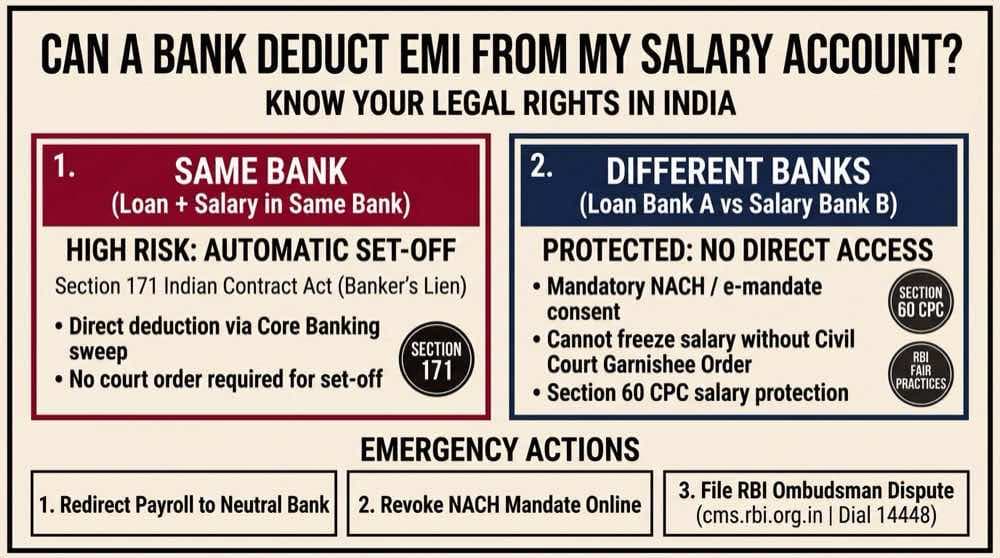
Figure 1.0: Statutory decision framework for salary account deductions under Indian banking law.
01. Quick Answer: When Can a Bank Deduct EMI From Your Salary?
A bank can deduct EMI from your salary account only in two situations. Both situations have clear legal rules in India.
First, you gave written permission through an active NACH mandate, ECS form, or standing instruction. The bank uses this mandate to debit your monthly EMI on a set date.
Second, your loan and salary account are in the same bank. Standard loan agreements grant banks a Right of Set-Off and a Banker Lien under Section 171 of the Indian Contract Act, 1872. If your loan defaults, the bank can sweep your salary deposit to cover overdue dues.
02. Loan and Salary Account in the Same Bank: The Banker's Lien Trap
Having your loan and salary account in the same bank creates huge financial risks during a default.
Standard loan contracts give the lender an express Right of Set-Off. Under Section 171 of the Indian Contract Act, 1872, banks have a statutory lien over customer deposits.
The moment your employer credits salary, the core banking software detects the funds. It sweeps the balance to pay your overdue EMIs through an internal transfer.
This internal sweep does not use NACH clearing. If you face loan default, read our full guide on personal loan settlement in India.
03. Can a Bank Deduct Loan EMI Without Your Permission or Notice?
Many borrowers ask if banks can deduct salary without a fresh notice. The answer depends on your loan contract.
You gave historical consent when signing your loan agreement. In HDFC Bank Ltd. vs. Anish Munjal, the NCDRC ruled that setting off funds without separate notice upon default is not a service deficiency.
04. Can a Bank Deduct Your Entire Salary for an Unpaid Loan?
Losing your whole salary leaves zero money for food and rent. Indian law provides clear limits on wage seizure.
In civil courts, seizing your entire salary is strictly illegal. Under Section 60(1)(i) of the Civil Procedure Code (CPC), 1908, the first Rs 1,000 plus two-thirds of the remainder is exempt from attachment.
However, for same-bank accounts, banks use contractual liens. In February 2026, the Kerala High Court Division Bench in Canara Bank v. Agi Kumar S. held that Section 60 CPC applies to court orders, not internal bank liens.
05. What is the Difference Between Auto-Debit and Loan Recovery?
1. Scheduled Auto-Debit
- Law: Section 25 PSS Act, 2007.
- Scope: Single fixed monthly EMI.
- Control: Cancel online via net banking.
2. Loan Recovery Sweep
- Law: Section 171 Contract Act, 1872.
- Scope: Total overdue arrears and charges.
- Control: Requires shifting salary account.
06. Can You Change Your Salary Account If You Have a Loan in the Same Bank?
Yes. You have the full legal right to shift your salary to another bank, even with unpaid loans in your current bank.
Step 1: Open a Neutral Account
Open a new account in a bank where you have zero loans, credit cards, or guarantor duties.
Step 2: Submit Details to Employer HR
Give your new account details to payroll before the monthly cutoff for all future pay.
Step 3: Manage the Old Account
After three months with no pay credits, the old account converts to a standard savings account.
07. How to Stop Automatic EMI Deductions and Cancel NACH Mandates
Under RBI and NPCI rules, banks cannot deny a customer request to cancel an active NACH auto-debit mandate.
Method A: Online
Log into net banking. Open Manage Mandates, find the UMRN, click Revoke, and confirm by OTP.
Method B: Branch Letter
Submit a written request to your branch manager under RBI rules. Keep a stamped copy.
Salary Account Deduction & Banker's Lien Screener
Select your loan and salary account relationship to calculate legal validity, statutory boundaries, and practical survival actions.
Severe Sweep of Entire Livelihood
While standard loan agreements give your bank a contractual Right of Set-Off, draining 100% of a customer salary leaving zero balance for basic food, rent, and family survival violates RBI Fair Practices guidelines and natural justice principles.
Redirect next month payroll to a neutral bank immediately. File an urgent complaint with the Bank Principal Nodal Officer and escalate to the RBI Banking Ombudsman (14448) for arbitrary salary starvation.
Generated Grievance Complaint Letter Draft
To,
The Branch Manager / Principal Nodal Officer,
State Bank of India,

Subject: Formal Dispute and Grievance Regarding Unauthorized / Excessive Deduction from Salary Account

Account Number: [Your Account Number]
Loan Account Number: [Your Loan Account Number]
Date of Deduction: [Date of Deduction]
Amount Deducted: Rs. 60,000 (Out of Monthly Salary: Rs. 60,000)

Respected Sir / Madam,

I am writing to register an urgent grievance against the unilateral deduction of Rs. 60,000 from my salary account on [Date].

This sweep has taken 100% of my monthly salary, leaving me with zero funds for food, house rent, and essential medical expenses. While the bank may cite contractual set-off, leaving an account holder entirely destitute violates the RBI Fair Practices Code for Lenders.

I request you to:
1. Provide the exact statutory and contractual justification for this debit along with the Core Banking narration in writing.
2. Immediately reverse the deducted amount or release funds necessary for my basic subsistence.
3. Confirm that no further unilateral debits will be executed without prior written intimation.

If this matter is not resolved within 7 working days, I will escalate this grievance to the RBI Banking Ombudsman under the Reserve Bank - Integrated Ombudsman Scheme, 2021 on cms.rbi.org.in.

Yours sincerely,
[Your Name]
Registered Mobile: [Your Mobile Number]
Email Address: [Your Email ID]
Tip: Replace bracketed text with your real account and loan details, then deliver by hand or email to the branch manager and keep proof of receipt.
09. The Ground Reality: What Really Happens When Accounts Are Swept
All these RBI rules, regulatory guidelines, and police FIR provisions exist officially in the books. However, the ground reality is that the Indian judicial and police system moves very slowly. In most everyday cases, lodging a formal complaint or filing an FIR will not give you immediate relief from aggressive collection calls.
The honest fact is: until all of your outstanding loans are either officially settled (via One-Time Settlement) or fully closed, the probability of getting complete peace of mind from recovery agencies is very low.
1. Change Your Mobile Number: Switch to a fresh SIM card for daily use, sharing it strictly with close family. Keep your old loan-registered SIM on silent in a spare phone to check SMS once weekly for official bank notices. This instantly cuts off the non-stop daily barrage of abusive phone calls.
2. Shift Your Residential Address: If recovery agents or local collection musclemen know your rented flat and keep showing up to humiliate you before neighbors, relocate to a different address if possible to protect your family from doorstep embarrassment.
3. Delete the Loan App & Revoke All Permissions: Immediately uninstall the lending app from your smartphone. Before deleting, open phone settings, revoke all permissions (contacts, storage, camera, location), and clear app data so trackers cannot continue harvesting your real-time data or accessing your contact list.
10. What to Do If Your Bank Deducts Money Wrongfully: 5 Action Steps
Step 1: Check Statement Narration
Look at your statement text. Check if the entry states NACH, standing instruction, or internal recovery transfer.
Step 2: Redirect Future Payroll
Give a new neutral account to company HR before the next payroll cutoff date to prevent repeat sweeps.
Step 3: Submit Branch Dispute
Submit a written grievance to your branch manager with your settlement letter or mandate revocation receipt.
Step 4: Escalate to Principal Nodal Officer
Email your bank Principal Nodal Officer quoting your branch grievance ticket if unresolved in seven days.
Step 5: File with RBI Ombudsman (14448)
Lodge an online complaint on cms.rbi.org.in if the bank fails to respond within 30 days. To calculate realistic OTS waiver figures, use our loan settlement calculator.
11. Frequently Asked Questions (FAQ)
Can a bank deduct EMI from my salary account automatically?▼
Yes. If you signed a NACH or standing instruction mandate, the bank debits your EMI on the monthly due date.
Can the same bank deduct loan dues from my salary account without permission?▼
Yes. Under Section 171 of the Contract Act, banks have a Banker's Lien and Right of Set-Off to recover overdue debt.
Can a bank deduct money from my account without an active EMI mandate?▼
Only if your loan is in the same bank. An outside bank cannot debit your salary without a valid NACH mandate.
Can a bank deduct my entire salary for an unpaid personal loan?▼
Courts cannot seize full salary under Section 60 CPC. Internal sweeps take full balances, but you can dispute this with the RBI Ombudsman.
Can I change my salary account if I have an active loan with the same bank?▼
Yes. You can shift payroll to a new bank anytime. Your loan stays valid, but you must pay EMIs through other means.
Can I stop automatic EMI deductions from my bank account?▼
Yes. Under RBI and NPCI rules, you can cancel any NACH mandate online through net banking or at your home branch.
What should I do if my bank deducts more than the agreed EMI amount?▼
Check your statement description. Submit a written dispute to the Branch Manager and file a complaint on cms.rbi.org.in.
Where can I complain if a bank makes an unauthorized salary deduction?▼
File a complaint with the Bank Nodal Officer. If unresolved in 30 days, lodge a case with the RBI Ombudsman at 14448.
Official Statutory Resources & Regulatory Portals
RBI & GOVT VERIFIEDAccess official government portals, regulatory ombudsman channels, and statutory dispute resolution bodies governing Indian banking and borrower rights:
- RBI Integrated Ombudsman Scheme (CMS)↗
File complaints against bank recovery abuse and fair practice violations
- RBI Sachet Portal (Illegal Recovery & Harassment)↗
Report unauthorized lending apps and aggressive recovery agency violations
- NALSA National Lok Adalat Schedules↗
Statutory alternative dispute resolution for mutually agreed OTS settlements
- National Consumer Helpline (NCH)↗
Government grievance redressal under Department of Consumer Affairs
- National Cyber Crime Reporting Portal (1930)↗
Official reporting for recovery blackmail, cyber threats, and extortion
Community Discussion & Case Notes
0 CommentsNo comments posted yet. Be the first to share your experience below!
Join the Discussion & Share Your Experience
Have you dealt with this situation or received a notice? Share your questions or experience with other borrowers.
Find this content helpful?
If this guide has helped you navigate your settlement journey, consider showing some support to keep this platform running.