S
Shubham d.hello this is a good article
Learn why retail bankruptcy under IBC 2016 is not active. See how old insolvency laws put your assets at risk. Discover why bank settlements offer faster relief.
Ordinary citizens cannot file for bankruptcy under the IBC. Part III only applies to personal guarantors for corporate loans. Filing in District Court under the 1920 Act leads to asset seizure by an Official Receiver. It also cancels your business rights. Negotiating an Out-of-Court Settlement (OTS) or Lok Adalat decree is faster, safer, and protects your assets.
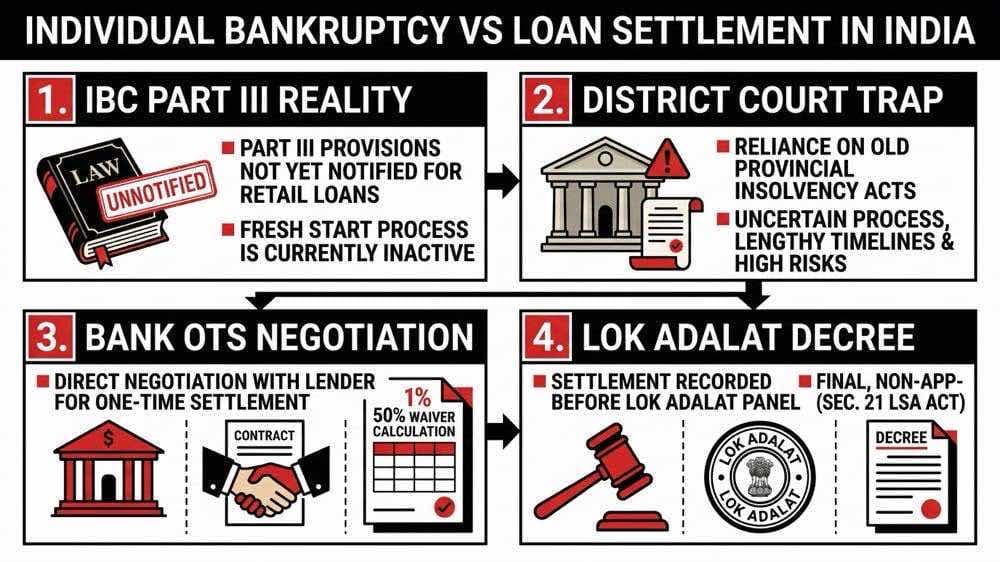
Figure 1: Statutory Framework Comparing Court Bankruptcy vs Bank OTS & Lok Adalat
Telling recovery agents that you plan to declare bankruptcy will not stop collection calls. Rogue agencies often increase abusive calls, fake legal notices, and home visits when borrowers mention insolvency.
Many websites claim that individuals can wipe out loans under the IBC 2016. This is not true.
In November 2019, the government issued Notification S.O. 4126(E). This rule brought Part III of the IBC into force only for personal guarantors to corporate companies. The Supreme Court confirmed this in Lalit Kumar Jain v. Union of India (2021).
If you have personal loans or credit card dues, Part III is not available to you. The government has not started it for general citizens.
Section 80 of the IBC outlines a Fresh Start process. It requires income under 60,000 Rupees and debt under 35,000 Rupees. Most retail loan debts are much higher. More importantly, Section 80 is not yet in force.
Section 243 of the IBC is not active. Because of this, old laws like the Provincial Insolvency Act 1920 still apply in District Courts. Filing under this old law brings severe risks:
Under Section 164 of the Companies Act, an insolvent person cannot be a company director. You lose your right to run or manage any registered business.
Under Articles 102 and 191 of the Constitution of India, an insolvent citizen cannot contest elections. You cannot hold any public office or seat in Parliament or State Assemblies.
Under Section 56 of the Act, all your assets go to a Court Receiver. The receiver can take your car, surplus salary, and any future family inheritance until you are discharged.
Section 19 requires publishing your insolvency order in government gazettes and local newspapers. This public record hurts your family reputation and future job prospects.
Banks freeze your accounts and stop cheque facilities once they receive an insolvency notice. You cannot use normal banking services without court permission.
Some lawyers advise borrowers to file petitions in the NCLT. This is a mistake.
Under Section 60 of the IBC, NCLT only handles corporate cases and corporate guarantors. It has zero power over personal loans or credit cards. If you file in NCLT, the court will dismiss your case. You will lose your money on legal fees.
Here is how court bankruptcy compares with bank settlements and Lok Adalat decrees:
| Point | Court Insolvency | Bank OTS | Lok Adalat |
|---|---|---|---|
| Time Needed | 5 to 15 Years | 30 to 60 Days | 1 Day Hearing |
| Asset Safety | Receiver Seizure | Fully Retained | Fully Retained |
| Civil Rights | Disqualified | Protected | Protected |
| Privacy | Gazette Notice | Private Deal | Confidential |
| Waiver Level | Asset Based | 40% to 75% | 40% to 75% |
| Legal Order | Can Be Appealed | Bank NDC | Final Court Decree |
Instead of filing for bankruptcy, follow these steps to resolve unpaid loan accounts safely:
Under Section 171 of the Contract Act, banks can take money from your savings to cover loan defaults. Open an account in a different bank for your salary and daily needs.
Document real financial problems like job loss, illness, or business drop. Send a letter to the bank Nodal Officer asking for a settlement under RBI rules.
When an account is 90 days overdue, banks set aside funds for losses. Use our Loan Settlement Calculator to calculate your settlement target and offer a fair lump sum.
Pay money directly into your loan account number. Never pay cash to recovery agents. Get an official No Dues Certificate (NDC) or record the settlement at a Lok Adalat for a final decree.
No. The Central Government has not notified Part III of the IBC for retail borrowers. Today, only corporate personal guarantors can use IBC in NCLT. Ordinary citizens with credit cards or personal loans cannot file under IBC.
The Fresh Start clause aims to clear debt up to 35,000 Rupees for people earning under 60,000 Rupees yearly. However, Section 80 has not been notified by the government. It is completely inactive in practice.
Under the Provincial Insolvency Act 1920, the court appoints an Official Receiver. The receiver takes control of your assets, bank accounts, and future inheritances. You also lose your right to serve as a company director or hold public office.
An Out-of-Court Settlement lets you resolve debt directly with the bank within 30 to 60 days. You get a 40% to 75% waiver. You keep your property, protect your civil rights, and avoid long court trials.
Yes. Under Section 21 of the Legal Services Authorities Act 1987, a Lok Adalat award is equal to a Civil Court decree. It is final and binding on both sides. No appeal can be filed against it in any court.
No. Loan default is purely a civil breach of contract under the Indian Contract Act 1872. It is not a crime. Police officers cannot arrest, summon, or question you for unpaid personal loans or credit card bills.
hello this is a good article
Have you dealt with this situation or received a notice? Share your questions or experience with other borrowers.
Access official government portals, regulatory ombudsman channels, and statutory dispute resolution bodies governing Indian banking and borrower rights:
File complaints against bank recovery abuse and fair practice violations
Report unauthorized lending apps and aggressive recovery agency violations
Statutory alternative dispute resolution for mutually agreed OTS settlements
Government grievance redressal under Department of Consumer Affairs
Official reporting for recovery blackmail, cyber threats, and extortion
Official repository of the Insolvency and Bankruptcy Code bare act and notifications
Statutory board governing corporate insolvency and personal guarantors
Section 21 statutory awards for non-appealable loan settlement decrees
If this guide has helped you navigate your settlement journey, consider showing some support to keep this platform running.