Arbitration Award Defense: 4-Stage EP Court Objection Protocol
Section 12(5) Shields, Section 34 Appeals & Section 60 Wage Caps
Banks and NBFCs often appoint friendly sole arbitrators to pass swift awards. These awards order borrowers to pay massive sums. You can fight back. Use statutory shields under the Arbitration Act and the Civil Procedure Code. This guide explains how to void biased awards, stop salary attachment, and settle debt safely.
If a lender named a sole arbitrator without your consent, that award is void. The Supreme Court confirmed this in TRF Ltd and Perkins Eastman. You can file a Section 34 petition within three months. Even during execution, Section 60 CPC protects most of your wages. You can also settle the debt at any time through a compromise offer.
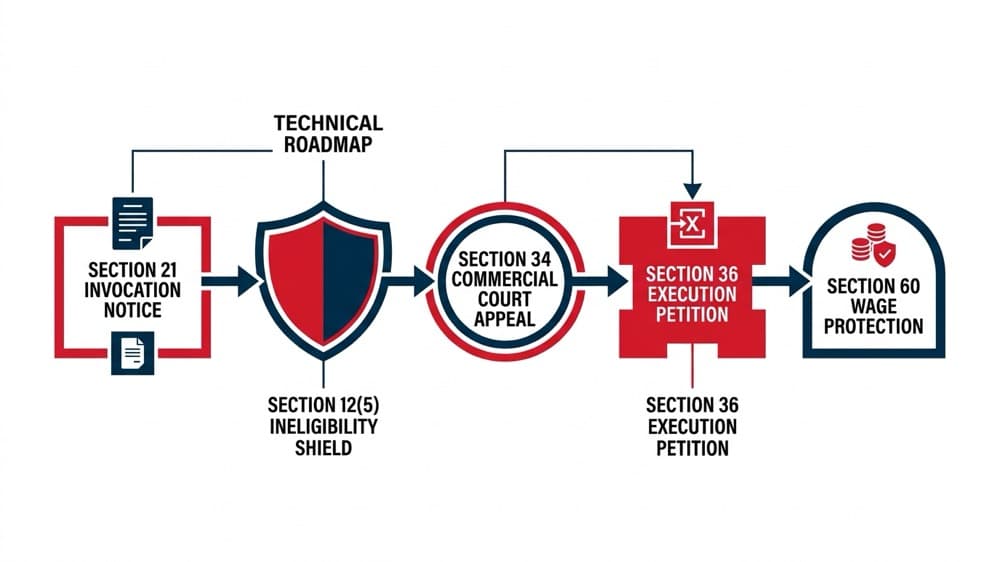
Figure 1: 4-Stage Defense Protocol from Invocation Notice to Wage Protection
Mandatory Ground Reality Note on Arbitration
Reality CheckMost borrowers panic when they get an arbitration notice or court warrant. Recovery agents make fake threats. They claim police will arrest you tomorrow or seize your home. These claims are false. Loan default is a civil dispute. Police cannot jail you for unpaid credit cards or personal loans.
Filing court papers does not stop daily recovery calls right away. True peace comes only when you settle the loan or close the account. Protect your peace of mind. Change your mobile number if harassment continues. Shift to a new rental home if needed. Delete loan apps from your phone. Cancel all contact list and storage permissions.
01. The 5-Point Arbitrator Invalidation Test
Under Section 12(5) and the Seventh Schedule, an arbitrator with lender ties cannot act. Check these five key points:
If the arbitrator handles ongoing cases for the bank, they are disqualified under Entry 22 and 31.
Did the bank pick the sole arbitrator on its own? Under Perkins Eastman, this makes the appointment void.
Many lenders use online dispute platforms that auto-assign arbitrators. Without your post-dispute written consent, the forum has no legal power.
Lenders must issue a formal invocation notice under Section 21. If they skipped this step, the proceedings are invalid.
Did the arbitrator pass an order without sending summons to your real address? You can quash the award under Section 34 for lack of notice.
02. The 4-Stage Tactical Objection Protocol
Follow these four steps to protect your rights at every phase:
When the bank sends a Section 21 notice, send a written objection. Reject their chosen arbitrator. Demand that the High Court appoint a neutral arbitrator under Section 11(6).
If hearings start, file a plea under Section 16 read with Section 12(5). Cite the specific Seventh Schedule disqualification. File this plea before the first main hearing.
Move the District Commercial Court within three months of receiving the award. Cite Bharat Broadband and Proddatur Cable. Ask for a stay on execution under Section 36(2).
Did you miss the Section 34 deadline? You still have hope. In the executing court, file an objection under Kotak Mahindra Bank v. Narendra Kumar Prajapat (2023). The Delhi High Court held that an award from a unilateral arbitrator is a total nullity. The executing court can refuse to enforce it. File a wage shield affidavit at the same time.
03. Court Jurisdiction and Filing Matrix
Different legal remedies belong to different forums. Use this quick guide to choose the right court:
| Legal Action | Court / Forum | Time Limit |
|---|---|---|
| Section 11(6) Plea | High Court | Before final award |
| Section 34 Petition | District Commercial Court | 3 months + 30 days |
| Section 36 Stay | Commercial Court | With Section 34 |
| Order 21 Objection | Executing Civil Court | Within notice window |
| Lok Adalat Compromise | NALSA Lok Adalat | Any open stage |
04. Section 60 CPC Salary Attachment Shield
Even if a court allows execution, law protects your daily livelihood. Section 60 of the Civil Procedure Code limits how much salary lenders can touch:
Attachable Pay = (Net Salary - 1,000) / 3
First 1,000 rupees + two-thirds of remainder = fully exempt
Lenders cannot touch your household goods, kitchen tools, or farming land. File a sworn affidavit to claim these statutory protections.
05. One-Time Settlement (OTS) Exit at Any Stage
Lenders spend heavy legal fees on court cases. Most banks gladly accept an out-of-court deal to close bad files:
Write to the Stressed Asset Resolution desk or Bank Nodal Officer. Offer a lump sum payment of 40% to 65% of the true loan balance.
Request the judge to refer your case to the next National Lok Adalat. Lok Adalat settlements are cheap, fast, and final. No court fees apply.
Ask the court to send the dispute to mediation under Section 89 CPC. A trained neutral mediator helps both sides agree on a fair payment plan.
06. Frequently Asked Questions
Can a bank appoint its own in-house arbitrator for a loan dispute?+
No. The Supreme Court ruled in TRF Ltd and Perkins Eastman that lenders cannot choose their own sole arbitrator. Any party with an interest in the dispute cannot pick the judge. Such appointments are void from the very start.
What is the time limit to challenge an arbitration award under Section 34?+
You must file your challenge within three months of getting the award. The court can grant thirty extra days for valid delays. Once 120 days pass, you lose the right to challenge forever.
Can the bank attach my full salary to recover an arbitration award?+
No. Section 60 of the Civil Procedure Code protects your income. The first 1,000 rupees of your monthly salary is safe. Two-thirds of the remaining salary is also exempt. On a 40,000 rupee salary, only 13,000 rupees can be attached.
What happens if I got no notice before the award was passed?+
An award passed without notice is illegal. You can set it aside under Section 34. You must prove to the court that you never received hearing dates or summons.
Can I settle the loan after an execution petition is filed?+
Yes. Banks prefer quick settlements over long court trials. You can negotiate a one-time settlement at any point. Once you pay the agreed sum, the bank drops the court petition.
Does attending a hearing waive my right to challenge the arbitrator?+
No. The Supreme Court in Bharat Broadband ruled that attending hearings does not waive Section 12(5) bias rules. You only waive rights if you signed a clear written agreement after the dispute started.
Community Discussion & Case Notes
0 CommentsNo comments posted yet. Be the first to share your experience below!
Join the Discussion & Share Your Experience
Have you dealt with this situation or received a notice? Share your questions or experience with other borrowers.
Official Statutory Resources & Regulatory Portals
RBI & GOVT VERIFIEDAccess official government portals, regulatory ombudsman channels, and statutory dispute resolution bodies governing Indian banking and borrower rights:
- RBI Integrated Ombudsman Scheme (CMS)↗
File complaints against bank recovery abuse and fair practice violations
- RBI Sachet Portal (Illegal Recovery & Harassment)↗
Report unauthorized lending apps and aggressive recovery agency violations
- NALSA National Lok Adalat Schedules↗
Statutory alternative dispute resolution for mutually agreed OTS settlements
- National Consumer Helpline (NCH)↗
Government grievance redressal under Department of Consumer Affairs
- National Cyber Crime Reporting Portal (1930)↗
Official reporting for recovery blackmail, cyber threats, and extortion
- Arbitration and Conciliation Act, 1996 (Section 12, 34, 36)↗
Full text of the Arbitration Act provisions governing arbitrator disqualification and award challenges
- Code of Civil Procedure, Section 60 (Wage Exemptions)↗
Statutory salary and asset protection formula for execution proceedings
- NALSA National Lok Adalat Schedule↗
Official schedule for Lok Adalat sittings to convert disputes into binding settlements
Find this content helpful?
If this guide has helped you navigate your settlement journey, consider showing some support to keep this platform running.