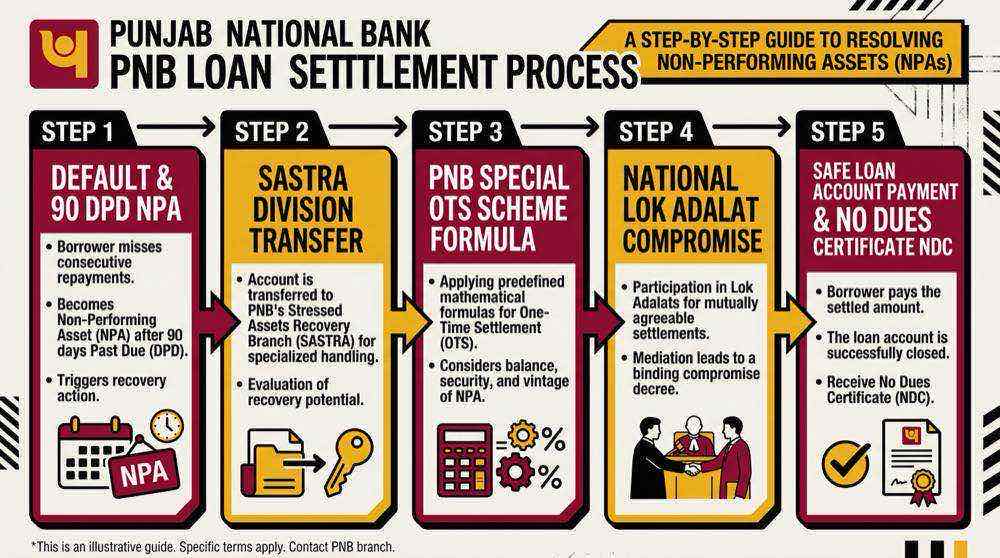
Figure 1: Statutory 5-Stage PNB Stressed Asset Lifecycle and SASTRA OTS Roadmap.
⚡ Empirical CalculatorUNSECURED NPA
PNB Loan Settlement & SASTRA Haircut Estimator
Calculate realistic One-Time Settlement (OTS) compromise ranges based on PNB SASTRA and Special OTS circular guidelines.
Unsecured retail advance. Delinquent accounts past 180 DPD qualify for 100% penal interest waiver and up to 55% principal reduction.
₹4,00,000
₹25,000₹25,00,000₹50,00,000
Target Settlement Offer:50%–65% Haircut
Realistic Settlement Range:₹1,40,000 – ₹2,00,000
Estimated Debt Forgiven:₹2,00,000 – ₹2,60,000
*100% penal interest and late bounce charges waived under PNB Special OTS.
ℹ️
PNB SASTRA Desk Guidance:Branch managers possess limited compromise authority due to CVC and CAG audit guidelines. Route compromise files through Circle SASTRA branches.
Punjab National Bank (PNB), founded in 1894 and significantly expanded through its 2020 amalgamation with Oriental Bank of Commerce (OBC) and United Bank of India (UBI), operates under strict public sector governance. Unlike private commercial banks (such as HDFC, ICICI, or Axis) where central recovery executives can negotiate informal discretionary waivers to clean quarterly balance sheets, PNB officials are bound by public accountability frameworks established by the Central Vigilance Commission (CVC) and the Comptroller and Auditor General (CAG).
When an individual borrower approaches a PNB branch manager seeking a loan waiver, the manager almost always refuses or demands 90% to 100% repayment. This resistance is not personal malice; it is institutional survival. In a Public Sector Bank (PSB), any unilateral concession granted by a branch official that causes a financial sacrifice to the bank can trigger an internal vigilance inquiry or CAG audit objection alleging corruption or criminal misconduct under the Prevention of Corruption Act.
The Core PSB Compromise Rule:Meaningful loan settlement in PNB cannot be achieved through informal verbal bargaining at the local branch counter. It requires understanding and navigating PNB's two formal, formula-driven resolution mechanisms: the board-approved Special OTS Scheme and the judicial compromise process of the National Lok Adalat.
2. The PNB SASTRA Division (CSCO & ZSCO Delegated Powers)
To handle stressed assets professionally and remove bad loans from retail branch staff, PNB established a specialized vertical known as SASTRA (Stressed Assets Targeted Resolution Action). Once an account crosses 90 days past due (DPD) and becomes a Non-Performing Asset (NPA), recovery and settlement jurisdiction transfers from the branch to specialized SASTRA committees.
PNB's compromise settlement authority is strictly segregated across institutional tiers with defined financial sacrifice limits:
● Branch Head (Scale IV / AGM): Holds very limited compromise powers, usually restricted to small retail dues up to ₹10 Lakh to ₹25 Lakh with strict ceiling caps on principal sacrifice.
● Circle SASTRA Committee (CSCO): Chaired by the Circle Head (Deputy General Manager / General Manager), holding settlement sanction powers for accounts with outstanding balances up to ₹1 Crore.
● Zonal SASTRA Committee (ZSCO): Chaired by the Zonal Manager (Chief General Manager), empowered to approve compromise proposals between ₹1 Crore and ₹5 Crore.
● Head Office SASTRA Committee (HOSCO): Holds exclusive jurisdiction for stressed debts exceeding ₹5 Crore and complex corporate consortiums.
Understanding this structure is crucial: if your outstanding debt exceeds ₹15 Lakh, pleading with your local branch manager is ineffective because they lack the delegated financial power to approve your waiver. Your formal hardship representation must be routed directly to the Circle SASTRA Officer.
3. PNB Special OTS Scheme Formula & Eligibility Limits
PNB periodically issues a board-approved Non-Discriminatory and Non-Discretionary Special OTS Scheme. This scheme is designed specifically to recover stubborn NPA accounts with outstanding balances up to ₹5 Crore by applying a fixed, non-negotiable formula that shields bank officers from vigilance scrutiny.
Under PNB's Special OTS guidelines, compromise amounts are computed strictly on the basis of the NPA classification vintage and the realizable value of any underlying security:
1. Sub-Standard Assets (Overdue 90 to 365 Days): Settlement requires repayment of 100% of the ledger principal balance, with waivers granted exclusively on unapplied interest, penal interest, and legal processing charges.
2. Doubtful Assets - Category D1 (NPA for 1 to 2 Years): Typical settlement formula mandates payment of 70% to 85% of the principal outstanding, plus 100% of the realizable value of any attached collateral.
3. Doubtful Assets - Category D2 & D3 (NPA for 2 to 4+ Years): Compromise benchmarks drop to 40% to 60% of the book balance, provided the account has no liquid collateral.
4. Loss Assets (100% Provisioned / Fully Written Off): Maximum haircut band. PNB routinely settles unsecured loss assets at 35% to 50% of the principal outstanding in a single lump-sum payment.
Mandatory Scheme Exclusions:Accounts categorized as Wilful Defaults under RBI circulars, cases involving CBI/police investigation or commercial fraud, government-guaranteed advances, staff loan accounts, and advances fully backed by liquid collateral (such as fixed deposits, NSCs, or gold pledges) are strictly ineligible for compromise concessions.
4. National Lok Adalat: The Safest Path to a 50% to 65% PNB Settlement
If your PNB loan is delinquent and you cannot qualify under branch-level criteria, the National Lok Adalat represents your highest probability of securing an affordable settlement. Organized quarterly by the National Legal Services Authority (NALSA) across all district courts and High Courts in India, Lok Adalats serve as statutory alternative dispute resolution forums.
For PNB officers, Lok Adalat is the single safest channel to approve debt haircuts. Under Section 21 of the Legal Services Authorities Act, 1987, an award passed by a Lok Adalat carries the full legal force of a civil court decree. Most importantly, it is final, binding, and non-appealable. Because the sacrifice is sanctioned in the presence of a judicial officer (a sitting or retired judge), PNB managers enjoy complete institutional immunity from future CVC inquiries, CAG audit objections, and internal vigilance investigations.
During National Lok Adalat pre-conciliation drives, PNB Circle SASTRA heads are given pre-delegated sacrifice targets to clear small retail NPAs. Unsecured personal loans, credit card balances, and defaulted MSME Mudra debts regularly settle at 40% to 65% waivers during these Saturday sessions. If you receive a Lok Adalat pre-conciliation notice from PNB, do not panic: treat it as an official invitation to negotiate your settlement under judicial oversight.
Punjab National Bank is one of the largest retail lenders in northern India, disbursing unsecured loans through products like PNB Sahyog (for government/corporate salaried employees) and the PNB Scheme for Pensioners (for retired central/state government and defense personnel).
Distressed borrowers in this segment face two aggressive operational realities during default:
● The Automated Section 171 Lien Trap: PNB's Core Banking System (Finacle) maintains automatic cross-account surveillance. Under Section 171 of the Indian Contract Act, 1872, banks possess a General Banker's Lien. If you default on a PNB personal loan, the system automatically freezes or siphons incoming funds from any savings, current, or fixed deposit account held under your Customer Information File (CIF) across all 10,000+ PNB branches.
● The Pensioner Account Seizure Trap: For defense and government pensioners, PNB frequently debits 100% of incoming pension credits to service defaulted loan balances. While Section 60(1)(g) of the Code of Civil Procedure (CPC) protects pensions from court attachment, banks routinely argue that contractual set-off clauses in the loan agreement grant them private debit authority.
Survival Strategy:If you anticipate an unavoidable default on a PNB personal loan, open an independent primary savings account at an entirely unrelated private or public bank (such as Canara, Axis, or HDFC) to ensure your basic living funds and pension credits remain uncompromised while you negotiate an OTS with the SASTRA centre.
Punjab National Bank issues credit cards through its dedicated PNB Cards division (pnbcard.in), offering cards across RuPay, Visa, and Mastercard networks (such as PNB RuPay Platinum, PNB Millennial, and PNB Global Gold).
While PNB's finance charges are moderately lower than private banks (2.95% per month, equating to 35.89% annualized APR, compared to 42% to 48% at HDFC or ICICI), revolving credit debt multiplies rapidly once late payment charges, over-limit fees, and 18% GST are compounded monthly.
1. Identify the True Principal: Request an unbilled itemized ledger statement from creditcardpnb@pnb.co.in. In accounts delinquent for 180+ days, finance charges and penal fees often constitute 40% to 60% of the gross outstanding balance.
2. Demand 100% Waiver of Interest and Penal Fees: PNB Cards' internal compromise guidelines permit full cancellation of unapplied finance charges once an account enters write-off status.
3. Negotiate on Pure Principal: Settle the net principal balance at a 30% to 50% discount in a single lump-sum payment.
4. Avoid Telecaller Token Tricks: PNB Cards recovery agencies frequently urge borrowers to deposit ₹2,000 or ₹5,000 as a “goodwill gesture” to hold legal notices. Never make token payments without a written settlement letter; token amounts are absorbed into penal interest without reducing principal and reset your limitation period under the Limitation Act, 1963.
7. PNB Home Loans vs PNB Housing Finance Limited (Entity Distinction & SARFAESI)
A critical mistake made by borrowers is confusing Punjab National Bank (the parent PSU bank) with PNB Housing Finance Limited (PNBHFL). These are two completely distinct legal, corporate, and operational entities:
● Punjab National Bank (PNB): Operates as a public sector commercial bank under RBI banking regulations. Offers home loans such as PNB Max-Saver and PNB Pride. Mortgage recovery is governed by PNB Circle SASTRA centres.
● PNB Housing Finance Limited (PNBHFL): An independent housing finance company registered under the National Housing Bank (NHB) and listed separately on the stock exchanges. PNB is merely a promoter shareholder. PNBHFL has separate recovery agents, independent legal counsels, and distinct escalation channels.
SARFAESI Enforcement Realities: For secured home loans with PNB parent bank, default follows the strict statutory timeline of the SARFAESI Act, 2002:
● 90 DPD: Account marked as NPA; equitable mortgage via Memorandum of Deposit of Title Deeds (MODTD) becomes enforceable.
● Section 13(2) Demand Notice: Gives the borrower 60 days to clear the entire outstanding balance. Borrowers have the statutory right to file a formal representation or objection under Section 13(3A) within 60 days, which PNB must respond to with reasoned grounds within 15 days.
● Section 13(4) Possession Notice: PNB takes symbolic possession, publishes notices in two local newspapers, and lists the property on the central auction portal IBAPI (ibapi.in).
● Section 13(8) Redemption Right: Borrowers can redeem their property by tendering the outstanding dues and costs at any time before the date fixed for publication of the public auction notice.
Given PNB's historic presence across northern agrarian hubs and trading clusters, a substantial portion of its NPA book consists of Pradhan Mantri Mudra Yojana loans, PNB Vyapar cash credit lines, and Kisan Credit Card (KCC) advances.
● MSME & Mudra OTS Formula: Unsecured Mudra NPAs older than 18 months routinely settle at 40% to 55% of the book outstanding balance when submitted directly to the Circle SASTRA Committee. PNB prefers recovering 50% in cash through OTS over waiting months for CGTMSE / CGFMU guarantee claim processing.
● Farmland Absolute SARFAESI Exemption: Under Section 31(i) of the SARFAESI Act, 2002, the provisions of SARFAESI do NOT apply to agricultural land. PNB cannot issue Section 13(2) notices, seize farmlands, or auction agricultural plots. Any recovery against agricultural debt requires a regular civil court decree or participation in specialized seasonal KCC compromise schemes.
9. Circle SASTRA Sanction Audit, Safe Remittance & 30-Day NDC SLA
Never pay a single rupee toward a settlement without receiving an official, system-generated compromise sanction letter. In PNB, authentic sanction letters are issued exclusively through the Circle SASTRA Committee (CSCO) and updated in PNB's Core Banking System (Finacle).
Verify these mandatory closure terms and execute payment with complete security:
● Finacle CBS Verification: Before transferring funds, ask your branch officer to confirm that the compromise sanction is registered in Finacle under the settlement module, stating the exact net compromised sum.
● Direct Loan Account Payment Only: Never transfer funds to any recovery agency, collection agent, or personal UPI account. Remit the agreed settlement sum directly into your 16-digit PNB loan account number via NEFT, RTGS, or a stamped branch deposit voucher.
● 30-Day NDC & Document Release SLA: Under RBI Master Direction RBI/2023-24/60, PNB is legally required to issue a formal No Dues Certificate (NDC) and return all original title deeds within 30 calendar days of receiving full compromise proceeds. If PNB delays without justifiable cause, the bank is mandated to pay you compensation of ₹5,000 for every day of delay.
● CIBIL Update: On day 45 post-settlement, verify your CIBIL report. The outstanding balance must reflect ₹0 with status "Settled". Rebuild your credit profile back above 750 within 18 to 24 months by maintaining disciplined on-time payments on a secured fixed-deposit credit card.
If local PNB branch staff or recovery agents violate RBI Fair Practices Code, bypass frontline counters using this 4-tier statutory ladder.
Tier 1: Branch Manager & Circle SASTRA Centre (CSCO)Turnaround: 7 Days
Submit a formal physical letter to the Branch Manager and mark a copy to the Chief Manager, Circle SASTRA Centre (CSCO). Request the Circle SASTRA desk to evaluate your debt under the Special OTS Scheme.
Tier 2: PNB Central Customer Care DeskTurnaround: 7 Days
If the branch is uncooperative, register a formal complaint with the central customer care desk to generate an official Service Request (SR) tracking number.
Tier 3: Principal Nodal Officer (PNO)Highest Internal Authority
The Principal Nodal Officer holds statutory oversight over all customer grievances and unfair recovery practices across India:
General Manager, Customer Care Centre
Email: pno@pnb.bank.inTelephone: +91-124-4126244Address: Punjab National Bank, Customer Care Centre, Plot No. 5, Institutional Area, Sector-32, Gurugram (Haryana) - 122001.
If PNB fails to resolve your dispute within 30 days or rejects a genuine hardship OTS representation without valid grounds, lodge an online complaint directly with the Reserve Bank of India.
To,
The Principal Nodal Officer,
Punjab National Bank, Customer Care Centre,
Plot No. 5, Institutional Area, Sector-32, Gurugram - 122001.
Email: pno@pnb.bank.in

Subject: FORMAL GRIEVANCE & DISPUTE: Unlawful Recovery Harassment / Section 171 Overreach - Loan A/C: [YOUR LOAN ACCOUNT NUMBER]

Respected Sir/Madam,

I am writing to register an urgent grievance regarding my loan account [YOUR LOAN ACCOUNT NUMBER] maintained at PNB [YOUR BRANCH NAME] branch.

Due to severe involuntary financial hardship ([BRIEFLY MENTION: e.g. medical emergency / loss of employment / business disruption]), my account has become delinquent. I have formally approached the branch seeking a compromise settlement under PNB's Special OTS Scheme / National Lok Adalat.

However, I am currently facing severe procedural violations:
1. Third-party recovery callers are contacting outside permissible hours (before 8:00 AM / after 7:00 PM) and threatening criminal prosecution, in direct violation of the RBI Master Direction on Fair Practices Code and Section 351 BNS (Criminal Intimidation).
2. [IF APPLICABLE: The bank has exercised an indiscriminate freeze on my savings/pension account under Section 171 Banker's Lien, depriving my family of basic sustenance and medical care, violating protections under Section 60(1) CPC.]

I request your urgent intervention to:
a) Direct the recovery agency to cease all uncivil communications and doorstep visits immediately.
b) Direct the Circle SASTRA Centre (CSCO) to evaluate my compromise settlement proposal under the applicable board-approved OTS formula.
c) Direct all future communications strictly to my registered email address.

If this harassment continues unabated, I shall be compelled to escalate this matter to the RBI Integrated Ombudsman (cms.rbi.org.in) and file a complaint before the National Consumer Disputes Redressal Commission.

Yours sincerely,
[YOUR FULL NAME]
[YOUR REGISTERED MOBILE NUMBER]
[YOUR REGISTERED EMAIL]
Can I settle my Punjab National Bank loan directly with the branch manager?▼
Branch managers in PNB have very limited discretionary waiver powers due to strict CVC and CAG audit scrutiny. For substantial waivers (40% to 65%), settlement proposals must be routed formally through PNB's Circle SASTRA Committee (CSCO) or settled during quarterly National Lok Adalat sessions where compromises receive judicial protection.
What is PNB's Special OTS Scheme and who is eligible?▼
PNB's Special OTS Scheme is a board-approved, non-discriminatory compromise framework for NPA accounts with balances up to ₹5 Crore. It offers fixed formula-based haircuts based on asset classification (Doubtful D1, D2, D3, or Loss). Wilful defaults, frauds, staff accounts, and cases under CBI investigation are strictly excluded.
Can PNB freeze my savings or pension account if my personal loan defaults?▼
Yes. Under Section 171 of the Indian Contract Act (Banker's General Lien), PNB's core banking software automatically places a hold on any savings, current, or fixed deposit account under the same Customer Identification File (CIF). To protect living funds, open an account with an independent bank before default occurs.
How much waiver can I realistically expect on a PNB personal loan?▼
For unsecured personal loans (such as PNB Sahyog or Pensioner loans) delinquent beyond 180 to 365 days, PNB typically approves waivers ranging between 35% and 60% of the gross outstanding balance, with 100% cancellation of penal interest and accumulated late fees.
What is the difference between PNB and PNB Housing Finance Limited?▼
PNB is a public sector commercial bank regulated directly by the RBI. PNB Housing Finance Limited (PNBHFL) is a separate, publicly listed housing finance company regulated by NHB/RBI. PNB is merely a promoter shareholder. Their loan policies, recovery teams, and escalation channels are completely independent.
Can PNB auction my agricultural farmland under the SARFAESI Act?▼
No. Under Section 31(i) of the SARFAESI Act, 2002, agricultural land is completely exempt from SARFAESI proceedings. PNB cannot seize or auction farmlands without obtaining a regular civil court decree. Any SARFAESI notice issued against agricultural land is legally void.
How does National Lok Adalat help in settling PNB debt?▼
National Lok Adalat provides a court-monitored settlement forum where PNB officials can grant 40% to 65% compromise waivers with complete immunity from internal vigilance inquiries, as Lok Adalat awards carry the binding authority of a civil court decree under the Legal Services Authorities Act, 1987.
What interest rate does PNB charge on defaulted credit cards?▼
PNB Cards charges 2.95% per month, which equals 35.89% annualized percentage rate (APR). When settling an overdue PNB credit card, demand a full 100% waiver of accumulated finance charges and negotiate to settle the net principal balance at a 30% to 50% discount.
How long does PNB take to issue a No Dues Certificate (NDC) after payment?▼
Under RBI circular RBI/2023-24/60, PNB is mandated to issue the No Dues Certificate and release all original security documents within 30 days of receiving the full settlement payment. Failure to do so entitles the borrower to ₹5,000 compensation per day of delay.
How does settling with PNB impact my CIBIL score?▼
The loan will be reported to credit bureaus as 'Settled' rather than 'Closed', which temporarily lowers your CIBIL score by 50 to 100 points. However, by using a secured credit card backed by a fixed deposit and maintaining spotless repayment, you can rebuild your score above 750 within 18 to 24 months.